
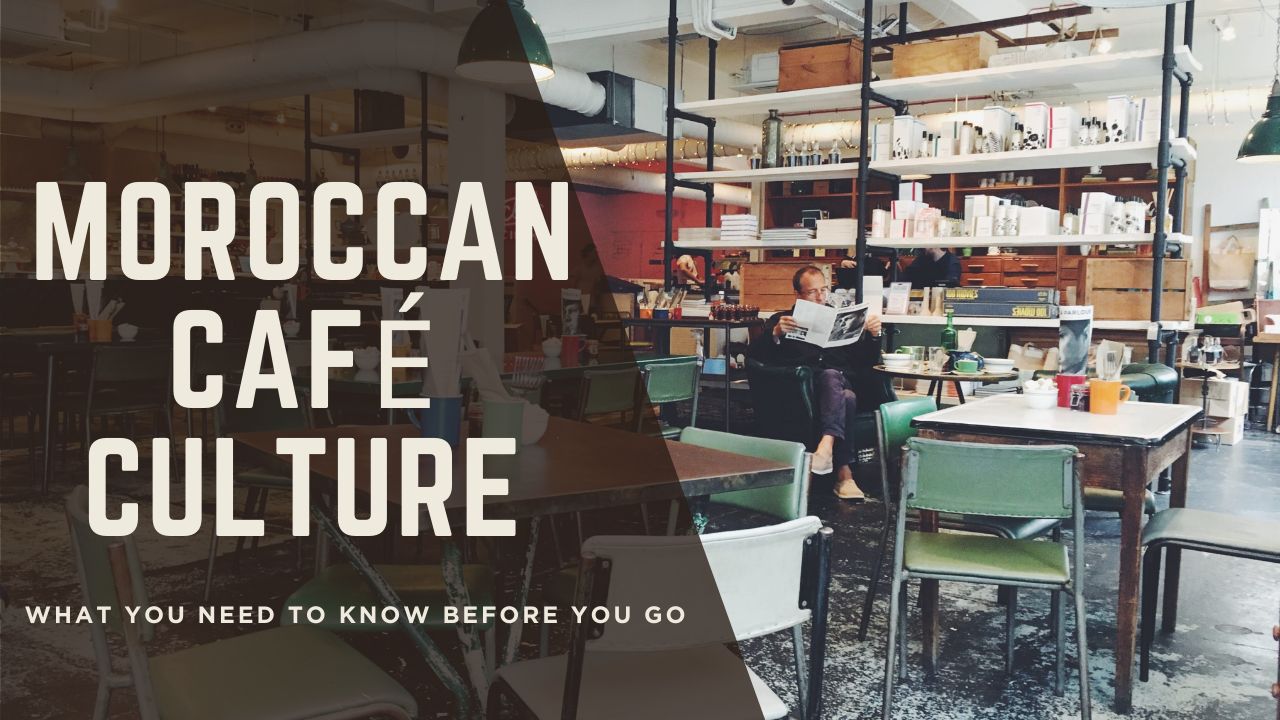
Moroccan Café Culture: What You Need to Know Before You Go

Written by Abdul · Native Moroccan Arabic teacher, founder of Daily Darija
Published on · Updated October 27, 2026 · 8 min read
Quick answer: In Morocco the café, l9ahwa (القهوة, pronounced l-9AH-wa, the same word as “coffee”), is the public living room: people meet, talk, watch football and watch the street for hours over one drink. To order like a local, ask for a nss nss (نص نص) → half coffee, half milk, or an atay (أتاي) → mint tea, sit on the terrace facing the street, pay when you leave and tip a couple of dirhams.
Example: Wa7d nss nss, 3afak = one nss nss, please ☕
Morocco isn’t just famous for its colorful souks, ancient medinas, and delicious food — it’s also home to a unique café culture. From busy city streets to quiet coastal towns, cafés are where locals relax, socialize, and watch the world go by.
In this guide, we’ll explore how Moroccan cafés work, the unspoken rules, and a few Darija phrases to help you blend in like a local.
When Moroccans want to see a friend, we rarely say “come to my place”. We say nmshiw l9ahwa? (نمشيو القهوة) → “shall we go to the café?”. The home is for family; the café is where the rest of life happens. 🇲🇦
1. The Moroccan Café Lifestyle
Moroccan cafés are more than just a place to grab a coffee! They’re a social hub. You’ll see friends chatting for hours, men playing cards, and people quietly sipping their atay b’na3na3 (mint tea) while watching the street life.
Quick fact: In Morocco, many cafés are male-dominated, especially in smaller towns. But in big cities like Casablanca, Marrakech, and Rabat, you’ll also find plenty of mixed cafés where everyone feels welcome.
Why cafés matter so much in Morocco
Three reasons. First, the Moroccan home is a private, family space, so friends, colleagues and business partners meet outside, and the café is the natural place. Second, a coffee costs a few dirhams and nobody will ask you to leave: one nss nss can last two hours. Third, football. On match nights the whole neighborhood watches together on the café TV, and the noise tells you the score before you arrive. ⚽
You will notice the chairs on the terrace all face the street, not each other. That is not a mistake: in Morocco, the street is the show. Sit down, order, and watch the city go by.
Who goes to the café, and when
Early morning is for nss nss with msemen or a croissant before work. Late afternoon, after work, is the busiest time, when friends meet for atay or coffee. Evenings belong to football and long conversations. In cities, modern cafés and pastry shops (pâtisseries) are fully mixed and very popular with women, students and families; the old-style neighborhood café with the men playing cards is a different, more traditional world.
2. Popular Drinks You’ll Find
Here are the most common drinks to try and how to order them in Darija:
| Drink | Darija | Meaning | |
|---|---|---|---|
| Mint Tea | Atay b na3na3 | Traditional sweet tea with mint | |
| Coffee with milk | Ness ness | Half milk, half coffee | |
| Black coffee | 9ahwa ka7la | Plain black coffee (espresso) | |
| Orange juice | 3asir dyal limon | Squeezed Orange juice |
How to order a nss nss, an atay or a 9ahwa like a local
Nss nss (نص نص) literally means “half half”: half espresso, half hot milk, served in a glass, not a cup. It is the most Moroccan drink there is, and in my experience the default order of every Casablanca office worker. Ask for wa7d nss nss and you already sound local.
Atay (أتاي) is served in a small glass from a metal teapot, the berrad, poured from high up to make foam. It comes very sweet. Say atay bla skkar (without sugar) or skkar shwiya (a little sugar) when you order, not after.
9ahwa (قهوة) alone gets you an espresso. For a bigger coffee with milk in a cup, ask for 9ahwa 7lib (قهوة حليب); for an espresso with just a splash of milk, 9ahwa mhersa (قهوة مهرسة). The “9” is the deep “q” sound from the back of the throat; kahwa works too, but 9ahwa is the real thing.
Moroccan Café Words to Know: Quick Reference Table
| Darija | Arabic | English |
|---|---|---|
| l9ahwa | القهوة | the café (and also “coffee”) |
| nss nss | نص نص | half coffee, half milk |
| atay | أتاي | mint tea |
| na3na3 | نعناع | mint |
| 9ahwa k7la | قهوة كحلة | black coffee (espresso) |
| 9ahwa 7lib | قهوة حليب | coffee with milk (large) |
| 3asir | عصير | juice |
| lma | الما | water |
| skkar | سكر | sugar |
| kas | كاس | glass |
| berrad | براد | teapot |
| garsoun | گارصون | waiter (from French “garçon”) |
| terrasa | طيراسة | terrace |
| l7sab | الحساب | the bill |
3. Tips for Visiting Moroccan Cafés
✅ Order at the table — waiters come to you.
✅ Take your time — cafés are for relaxing, not rushing.
✅ Cash is king — many small cafés don’t accept cards.
✅ People-watching is part of the experience — grab a terrace seat!
Café etiquette: the unspoken rules
-
Greet before you order. A salam or sba7 lkhir to the waiter comes first; the order comes second.
-
One drink is enough. Nobody expects you to order again after an hour. Staying is the whole point.
-
Pay when you leave. In many cafés the waiter brings the bill with the drink and you pay when you stand up. Say l7sab 3afak if nobody comes.
-
Tip in coins. One or two dirhams left on the table or on the tray is normal; more is generous.
-
Food is often elsewhere. Traditional cafés serve drinks and maybe breakfast. For a meal, go to a snack or a restaurant next door, and read my guide to ordering food and drinks in Darija.
🇲🇦 Cultural Note: Mint tea is called “Moroccan whisky” as a joke, because it is the drink of every occasion and the only one you will find in a traditional café: cafés do not serve alcohol. When your tea arrives, the host or waiter may say bsa7a (بصحة) → “to your health”, and you answer Allah y3tik sa7a → “may God give you health”.
4. Essential Darija Phrases for the Café
-
“ Bghit wa7d atay b na3na3, 3afak ” → I’d like a mint tea, please.
-
“ Sh7al taman? ” → How much does it cost?
-
“ La7sab, 3afak ” → The bill, please.
-
“ Bsa7a! ” → Cheers! / Enjoy your drink!
6 more café phrases to sound like a local
-
Wa7d nss nss, 3afak. (واحد نص نص عفاك) → “One nss nss, please.”
-
Atay bla skkar, 3afak. (أتاي بلا سكر) → “Tea without sugar, please.”
-
Zid liya shwiya dyal l7lib. (زيد ليا شوية د الحليب) → “Add a little milk for me.”
-
Wash kayn lwifi? Shnu l-code? (واش كاين الويفي؟ شنو الكود؟) → “Is there Wi-Fi? What is the password?”
-
Fin twalit, 3afak? (فين الطواليت عفاك) → “Where is the toilet, please?”
-
Khelli s-sarf. (خلي الصرف) → “Keep the change.”
🗣️ Pronunciation tip: nss nss is said fast, almost like one word: nessness. And 3afak (please) starts with the deep “3” sound; see my guide to please in Moroccan Arabic.
Mini-Dialogue: A Morning at a Moroccan Café
Here is a typical exchange on a terrace in Casablanca:
You: Sba7 lkhir! — Good morning!
Waiter: Sba7 lkhir, marhba. Shnu bghiti? — Good morning, welcome. What would you like?
You: Wa7d nss nss, 3afak. — One nss nss, please.
Waiter: Kas sghir wla kbir? — Small or large glass?
You: Kbir. W wa7d lma. — Large. And one water.
Waiter: Wakha, daba yji. — Okay, coming right away.
You (an hour later): L7sab, 3afak. — The bill, please.
Waiter: Khmstash dirham. Bsa7a! — Fifteen dirhams. Enjoy!
You: Allah y3tik sa7a. Khelli s-sarf. — Thank you. Keep the change.
Common Mistakes Visitors Make in Moroccan Cafés
-
Ordering a “latte” or “cappuccino” in a traditional café. The waiter will understand, but you want a nss nss. Keep the Italian names for the modern coffee chains.
-
Expecting a mug of filter coffee. 9ahwa means espresso. For something bigger, say 9ahwa 7lib.
-
Rushing. Drinking in ten minutes and asking for the bill looks strange. Stay, watch the street, let the tea cool down.
-
Asking for sugar after the tea arrives. The sugar is already inside. Say bla skkar when you order.
-
Looking for a food menu. Most traditional cafés serve drinks and pastries only. For tajine and couscous, you need a restaurant: see my Moroccan menu decoder in Darija.
FAQ: Moroccan Café Culture
What is a nss nss in Morocco?
Nss nss (نص نص) means “half half”: half espresso, half hot milk, served in a glass. It is the most popular café drink in Morocco.
How do you order coffee in Morocco in Darija?
Say wa7d 9ahwa, 3afak for an espresso, wa7d nss nss for half coffee half milk, or wa7d 9ahwa 7lib for a large coffee with milk. Add 3afak (please) at the end.
Can women go to cafés in Morocco?
Yes. In cities, modern cafés and pastry shops are fully mixed. Small traditional neighborhood cafés are often mostly men, so women travelers usually prefer a terrace in a busy area or a “salon de thé”.
How much does a coffee cost in Morocco?
In a normal café, a nss nss or an atay costs roughly 10 to 15 dirhams; in trendy or tourist cafés it can be 20 to 30 dirhams. Prices change, so ask bsh7al? if there is no menu.
Do Moroccan cafés serve alcohol?
No. Cafés serve coffee, tea, juices and sodas. Alcohol is only sold in licensed bars, hotels and some restaurants.
How do you say “café” in Darija?
L9ahwa (القهوة), the same word as coffee. Nmshiw l9ahwa? means “shall we go to the café?”.
Conclusion & Call-to-Action
Moroccan café culture is all about slowing down, connecting with people, and savoring the moment. Next time you’re in Morocco, try a local café, sip on a hot mint tea, and practice a few Darija phrases — you’ll fit right in!
📌 Want to learn more Darija phrases for cafés, restaurants, and shopping?
Follow us on Instagram @DailyDarija and join our waitlist for upcoming Darija courses!
The café is also the best classroom in Morocco: one nss nss, one waiter, and ten minutes of real Darija. If you want to be ready for that conversation, the Beginner Darija course starts exactly there. 🙏
Ready to go further?
Learn to speak Moroccan Arabic with confidence in the Beginner Darija course, or explore all the free Darija resources.
