How Moroccans Celebrate Ramadan (in Darija)
Introduction
Ramadan — Shahr Ramadan — is one of the most special and spiritual times of the year in Morocco.
It’s a month of fasting, reflection, and community, but also full of beautiful traditions, delicious food, and unique expressions in Darija.
In this post, we’ll explore how Moroccans celebrate Ramadan day by day — from the adhan (call to prayer) to the ftour table — and learn some key Darija words and phrases to help you join the celebration.
1. Suhoor: The Early Morning Meal
Before sunrise, families wake up for suhoor — in Darija, we call it “sehour” or sometimes “se7our”.
Typical Moroccan suhoor foods include:
- Khobz (bread)
- Amlou (almond paste with honey and argan oil)
- Lben (buttermilk)
- Atay (tea)
Darija phrase:
Ghadi nfi9o f se7our → “We'll wake up for suhoor.”
After eating, people pray Fajr (the dawn prayer) and go back to sleep or start their day.
2. Fasting All Day — “Siyam”
During the day, Moroccans fast — no food, no water, and no bad behavior.
It’s a time for patience, charity, and self-control.
Darija phrase:
Ana saym / sayma. → “I’m fasting.”
Ramadan mubarak! → “Blessed Ramadan!”
Moroccan cities slow down during the day — shops open late, streets are quiet, and people save their energy for the evening meal.
3. Ftour: Breaking the Fast at Sunset
As soon as the adhan of Maghrib is heard, everyone says Bismillah and breaks the fast — this is the most joyful moment of the day!
In Darija, the meal is called “lftour” — meaning “breakfast,” but during Ramadan, it refers to the sunset meal.
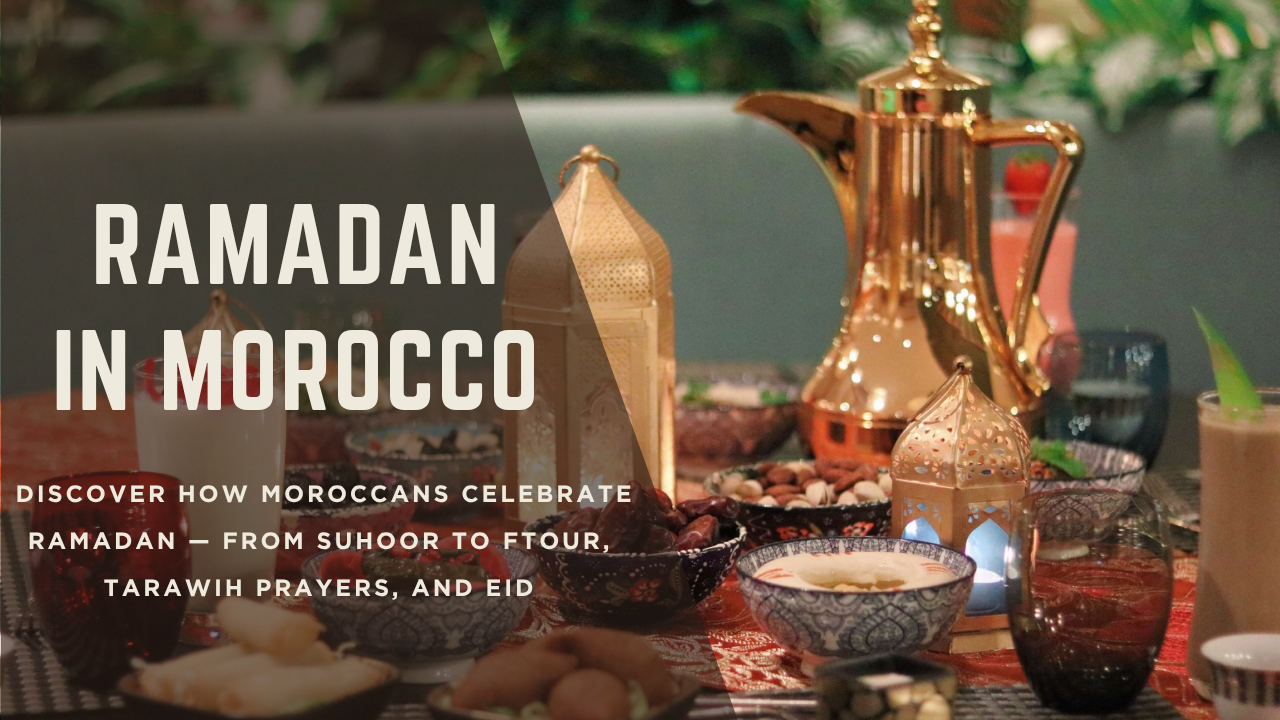
A typical Moroccan ftour includes:
- Chebakia (honey sesame cookies)
- Harira (Moroccan soup with lentils, chickpeas & tomato)
- Briwat (small pastries filled with cheese, meat, or almonds)
- Eggs, dates, juice, and of course, atay b na3na3 (mint tea)
Darija phrases:
Bsaha lftour! → “Enjoy your ftour!”
Lah ya9bel siyamak! → “May God accept your fast.”
Families gather around the table, and neighbors often send plates of food to one another — a beautiful act of sharing and community.
4. Evenings Full of Life and Faith
After Lftour, the night in Morocco comes alive!
People go to the mosque for Tarawih prayers, visit relatives, or take evening walks.
Cafés and streets fill with families and laughter — it’s a peaceful, joyful time.
Darija phrases:
Ghadi namshi ltarawih. → “I’m going to Tarawih prayers.”
Bghit nshouf sa7bi ba3d lftour. → “I want to meet my friend after ftour.”
5. Charity and Giving: “Zakat” and “Lkhir”
Generosity is a big part of Ramadan in Morocco.
People give food, clothes, or money to those in need — known as “zakat” or simply “lkhir”, meaning “goodness.”
Darija phrases:
Dir lkhir o nsah. → “Do good and forget about it.”
Lah yjazik b lkhir. → “May God reward you with goodness.”
It’s a time when the whole country feels connected — no matter your background or income.
6. Eid al-Fitr: The Celebration After Ramadan
When the new moon appears, Moroccans celebrate Eid al Fitr, or “Aïd Sghir” — the “small holiday.”
Families dress beautifully, visit relatives, and enjoy sweets like ghriba and kaab lghzal.
Darija phrases:
3id mubarak said! → “Happy blessed Eid!”
Kul 3am o nta bikhir! → “Wishing you well every year!”
It’s a time for joy, forgiveness, and gratitude — closing the month of Ramadan with happiness and renewal.
Vocabulary Recap
| English | Darija | |
|---|---|---|
| Ramadan | Ramadan | |
| Fast | Siyam | |
| Breakfast meal | Lftour | |
| Suhoor | Se7our | |
| Prayer | Sala | |
| Mosque | Jam3 | |
| Tea | Atay | |
| Sweets | L7alawiyat | |
| Eid | L3id |
The Spirit of Ramadan in Morocco
What makes Ramadan in Morocco so special is the balance of faith, family, and food.
It’s a month where time slows down, generosity grows, and hearts open.
Even if you’re not Muslim, being in Morocco during Ramadan is a chance to experience the country’s deep warmth, kindness, and community spirit.
Start Speaking Darija Today
Ready to speak Moroccan Arabic with confidence?
👉 Join my full Darija courses → Join my courses
👉 Listen to the Daily Darija Podcast → www.dailydarija.com/podcast
👉 Download your FREE pronunciation PDF → Download Here
👉 Follow me on Instagram → @dailydarija