
Darija for Kids: The Complete Guide to Learning Moroccan Arabic for Children
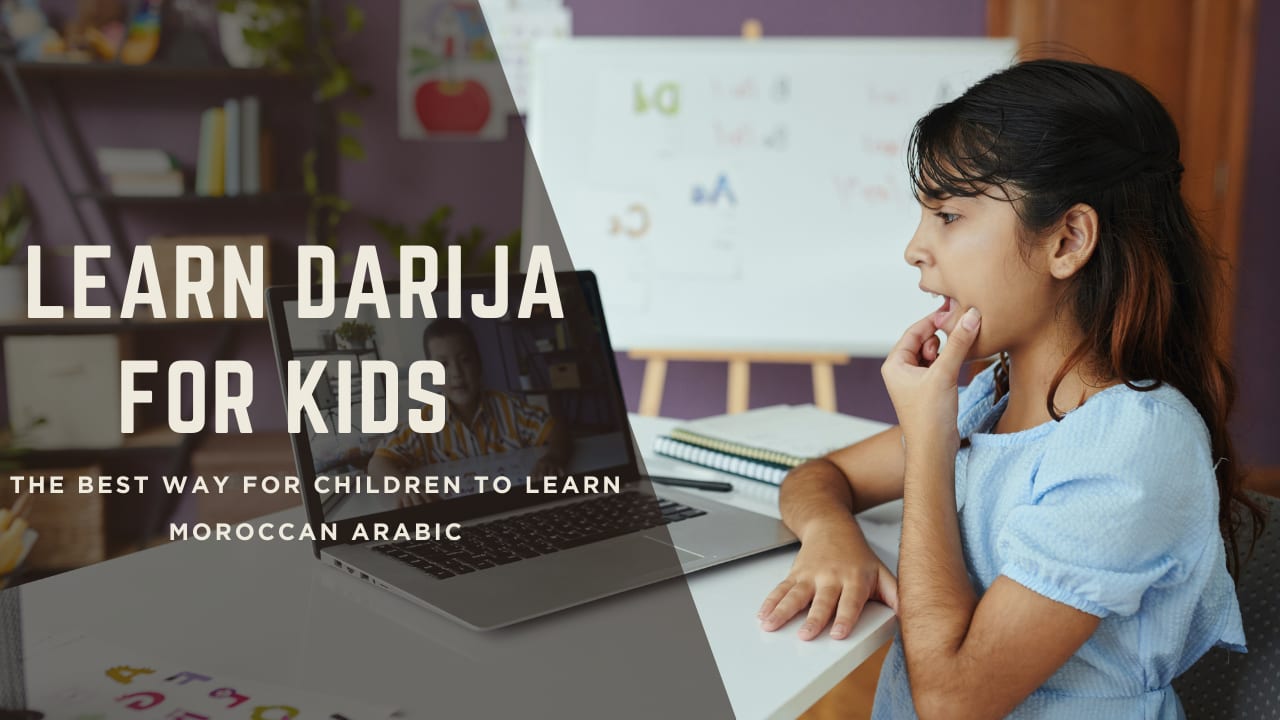

Written by Abdul · Native Moroccan Arabic teacher, founder of Daily Darija
Published on · Updated October 27, 2026 · 8 min read
Quick answer: Kids learn Darija (Moroccan Arabic) best by listening first, repeating and playing, 10–15 minutes a day, from as early as 3–4 years old. Start with family and everyday words like Mama, Baba, lma (الما, l-MA) → “water” and shukran (شكرا, shuk-RAN) → “thank you”, then add songs, games and small routines at mealtime and bedtime.
Example: Bghit lma, 3afak = I want water, please 💧
Moroccan Arabic, also known as Darija, is the language spoken daily in Morocco.
If you want your child to connect with Moroccan culture, communicate with family, or grow up bilingual, learning Darija is one of the best skills they can develop early.
If you're looking for the best way to teach Darija for kids, this complete guide will show you exactly how to do it — step by step.
Why Kids Should Learn Moroccan Arabic Early
Children learn languages faster and more naturally than adults.
Teaching your child Darija early helps them:
✅ Communicate with Moroccan family members
✅ Build a strong cultural identity 🇲🇦
✅ Develop better memory and cognitive skills
✅ Speak naturally without fear or hesitation
The earlier they start, the easier it becomes.
In my experience, the biggest gift is the family connection. A child who can say Labas a jedda? (لاباس أ جدة؟) → “Are you okay, Grandma?” on a video call makes a whole Moroccan family very happy ❤️
How Kids Learn Darija Best
Kids don’t learn like adults — they learn through fun, repetition, and interaction.
Here’s what works best:
👉 Listening first
Hearing Darija daily helps children absorb sounds and rhythm naturally
👉 Repetition
Repeating words and phrases builds confidence
👉 Play-based learning
Games, stories, and visuals make learning enjoyable
👉 Consistency
Even 10–15 minutes a day makes a big difference
How children learn Moroccan Arabic at each age
- Ages 3–5: listening, songs, pointing at things and single words. Do not expect full sentences; a child who understands aji (أجي) → “come here” is already learning.
- Ages 6–9: short phrases, games with rules, simple stories. This is the perfect age for mini-conversations at home.
- Ages 10+: children can follow a structured course, ask “why” and start reading Darija in Latin letters with numbers (3, 7, 9).
To compare methods in more detail, see the best way for kids to learn Darija fast.
Basic Darija Words for Kids
Start with simple, useful vocabulary.
- Salam → Hello
- Labas? → How are you?
- Baba → Dad
- Mama → Mom
- Khobz → Bread
- Lma → Water
Teaching everyday words helps kids use Darija in real life quickly.
30 first Darija words for kids (with Arabic script)
Here are the 30 words I recommend for a child’s first weeks. Teach 3 to 5 new words a week, always with the real object in front of the child.
| Darija | Arabic | English |
|---|---|---|
| Salam | سلام | Hello |
| Labas? | لاباس؟ | How are you? / Are you okay? |
| Bslama | بسلامة | Goodbye |
| Shukran | شكرا | Thank you |
| 3afak | عفاك | Please |
| Iyeh | إيه | Yes |
| La | لا | No |
| Baba | بابا | Dad |
| Mama | ماما | Mom |
| Khuya | خويا | My brother |
| Khti | ختي | My sister |
| Jedda | جدة | Grandma |
| Khobz | خبز | Bread |
| Lma | الما | Water |
| 7lib | حليب | Milk |
| Tuffa7a | تفاحة | Apple |
| Banan | بنان | Banana |
| Mesh | مش | Cat |
| Kelb | كلب | Dog |
| Kura | كورة | Ball |
| Ktab | كتاب | Book |
| Dar | دار | House, home |
| Wa7ed | واحد | One |
| Jouj | جوج | Two |
| Tlata | تلاتة | Three |
| 7mer | حمر | Red |
| Zre9 | زرق | Blue |
| Mzyan | مزيان | Good |
| Bghit | بغيت | I want |
| N3es | نعس | Sleep, go to sleep |
🗣️ Pronunciation tip: the 7 in 7lib is a breathy “h” from the throat (ح), the 3 in 3afak is a deep sound from the throat (ع), and the 9 in zre9 is a “k” made far back (ق). Children copy these sounds much more easily than adults. For more family words, see family words in Darija, and for counting games, Darija numbers from 1 to 100.
Fun Ways to Teach Darija to Kids
Learning should never feel like school. It should feel like playing. Here are some effective ideas:
- Play word games in Darija
- Read simple stories
- Use songs and repetition
- Practice short daily conversations
The goal is to make Darija part of their daily life.
5 easy Darija games and songs for kids
- “Shnu hada?” — point at an object and ask Shnu hada? (شنو هادا؟) → “What is this?”. The child answers khobz, kura, ktab… then swaps roles and asks you.
- Color hunt — ask Fin kayna shi 7aja 7amra? (فين كاينة شي حاجة حمرا؟) → “Where is something red?” and let the child run to find it.
- Counting stairs — count every step out loud: wa7ed, jouj, tlata… Kids love counting in a “secret” language.
- Your own family song — put new words on a tune your child already knows: Salam, salam, labas, labas, shukran, bslama. Silly songs are the ones children remember.
- Bedtime story in two languages — read a picture book and replace 5 nouns with Darija: mesh, kelb, dar… Next week, replace 10.
How to Teach Your Child Moroccan Arabic at Home
You don’t need to be a teacher to help your child learn Darija:
👉 Speak simple Darija at home
👉 Repeat key phrases daily
👉 Create small routines (mealtime, greetings, bedtime)
👉 Encourage your child to respond in Darija
Consistency matters more than perfection.
A simple 15-minute daily Darija routine for kids
- Morning (2 min): Sba7 lkhir! (صباح الخير) → “Good morning!” every day, same words, same smile.
- Mealtime (5 min): Wash bghiti lma? (واش بغيتي الما؟) → “Do you want water?”. Wait for Iyeh or La before you give it.
- Play time (5 min): one game from the list above, only in Darija.
- Bedtime (3 min): Tsba7 3la khir (تصبح على خير) → “Good night” (to a girl: Tsba7i 3la khir).
Even if you are not fluent, these four moments are enough to start. For 15 full routines with ready-to-use phrases, read how to teach your child Moroccan Arabic at home.
Example: a parent-child dialogue at breakfast
Mama: Sba7 lkhir, a 7bibi! — Good morning, my darling!
Adam: Sba7 lkhir, Mama! — Good morning, Mom!
Mama: Labas? N3esti mzyan? — Are you okay? Did you sleep well?
Adam: Iyeh, labas. — Yes, I’m okay.
Mama: Wash bghiti 7lib wla lma? — Do you want milk or water?
Adam: Bghit 7lib, 3afak. — I want milk, please.
Mama: Tfeddel. — Here you go.
Adam: Shukran, Mama! — Thank you, Mom!
Mama: Mzyan bezaf! Yallah nl3bo mn b3d. — Very good! Let’s play later.
🇲🇦 Cultural Note: Moroccan parents and grandparents use many sweet names for children, like a 7bibi (my darling, to a boy) or a 7bibti (to a girl). Children hear them all day, and they are often the first Darija words a child understands.
Best Resources to Learn Darija for Kids
To make learning easier and more structured, using the right resources is key:
- Podcasts → Improve listening
- YouTube → Visual learning
- PDF guides → Practice at home
- Books → Build vocabulary
BUT the most effective way is a structured program designed specifically for kids.
Darija learning app or online course for kids?
Many parents search for a Darija learning app. Apps can help a child review words on a tablet, but children learn to speak by hearing a real voice and answering it.
The best mix is short, guided screen time plus talking at home. To see what works online at each age, read learning Moroccan Arabic online for kids.
The Best Darija Course for Kids
If you want your child to actually speak and understand Darija, structure is everything. That’s exactly why I created a complete Darija course for kids:
👉 Designed specifically for children
👉 Step-by-step learning (no confusion)
👉 Fun, engaging, and easy to follow
👉 Focus on real-life speaking
Unlike random videos or apps, this course gives your child:
✅ Clear progression
✅ Confidence in speaking
✅ Real understanding of Moroccan Arabic
This is the best and most complete Darija course for kids available today.
👉 See what is inside on the Darija course for kids page.
Moroccan Arabic Books for Kids
In addition to the course, I’ve also created Darija books for kids available on Amazon. These books help children:
- Practice reading
- Learn new vocabulary
- Reinforce what they learn in the course
Combining books + course = faster results
Common Mistakes When Teaching Darija to Kids
- Translating every word into English right away. Show the object or the action instead. The child connects lma with water, not with the English word.
- Switching to English when the child answers in English. Keep calm and repeat the sentence in Darija. Children quickly learn that Darija works at home.
- Correcting every mistake. Repeat the right form with a smile (Ah, bghiti 7lib!) instead of saying “no, wrong”.
- Long lessons once a week. 10–15 minutes every day works much better than one hour on Sunday.
- Teaching Standard Arabic words instead of family Darija. If grandma says lma, teach lma. The goal is talking with family.
FAQ: Darija for Kids
What age should kids start learning Darija?
- Kids can start as early as 3–4 years old through listening and simple words.
Is Darija hard for children?
- Not at all! Kids learn Darija naturally when it’s taught in a fun and simple way.
How long does it take for kids to learn Darija?
- With consistent practice, kids can start speaking basic Darija in just a few weeks.
Can kids learn Darija online?
- Yes — with the right course and guidance, online learning is very effective.
What are the first Darija words to teach a child?
- Start with greetings and family: salam, labas, shukran, 3afak, Mama, Baba, then food words like khobz (bread) and lma (water).
Can I teach my child Darija if I am not fluent?
- Yes. Use a few phrases every day at fixed moments (morning, meals, bedtime) and learn new words together with your child.
Give Your Child a Head Start in Darija
Want your child to speak Moroccan Arabic with confidence? 🇲🇦
👉 Join my Darija course for kids → www.dailydarija.com
👉 Discover my Darija books for kids on Amazon → Get the books here
👉 Follow me on Instagram → @dailydarija
👉 Start today and watch your child progress step by step ❤️
Ready to go further?
Help your child speak Moroccan Arabic with confidence in the Darija course for kids, or explore all the free Darija resources.
